It’s not an ancient oriental trade route. It’s a hidden driveway to 492 Wainui Road leading to a silk lover’s heaven. This is where full-time textile artist Jean Carbon lives and works, inspired by stunning hilltop views over the wild and windswept West Coast Beach.
Photos: Margarete Kraemer, Anna Malec, Ernest Buczynski, supplied
Back in July I had no idea that attending the opening of a Shibori silk exhibition in Tauranga would take me back to my favourite West Coast beach two months later. It also afforded me and my friends interesting insights into the process of producing these sumptuous silk creations.
Finding one’s way to Jean’s clifftop studio is a little adventure. A long, steep, poplar lined driveway crosses a narrow bridge over a babbling stream and continues uphill, bending sharply at the end to reveal an expansive forecourt overlooking stunningly beautiful, black-sand Ngarunui Beach. Immediately the real estate agents’ catch cry Location! Location! Location! springs to mind.
Twin structures C’bon and C’barn
Jean’s home and studio, where she creates textiles sold under her label C’bon Textiles, is a half-round structure fashioned on agricultural storage barns. Next to it sits its twin, C’barn, a unique, open-plan accommodation with sweeping ocean views. Well-equipped and fully self-contained with sheltered private outdoor areas, it sleeps up to six people on two levels. “C’barn helps paying the bills,” says Jean, who is chuffed that it has just been nominated in the top ten places by Bookabach.
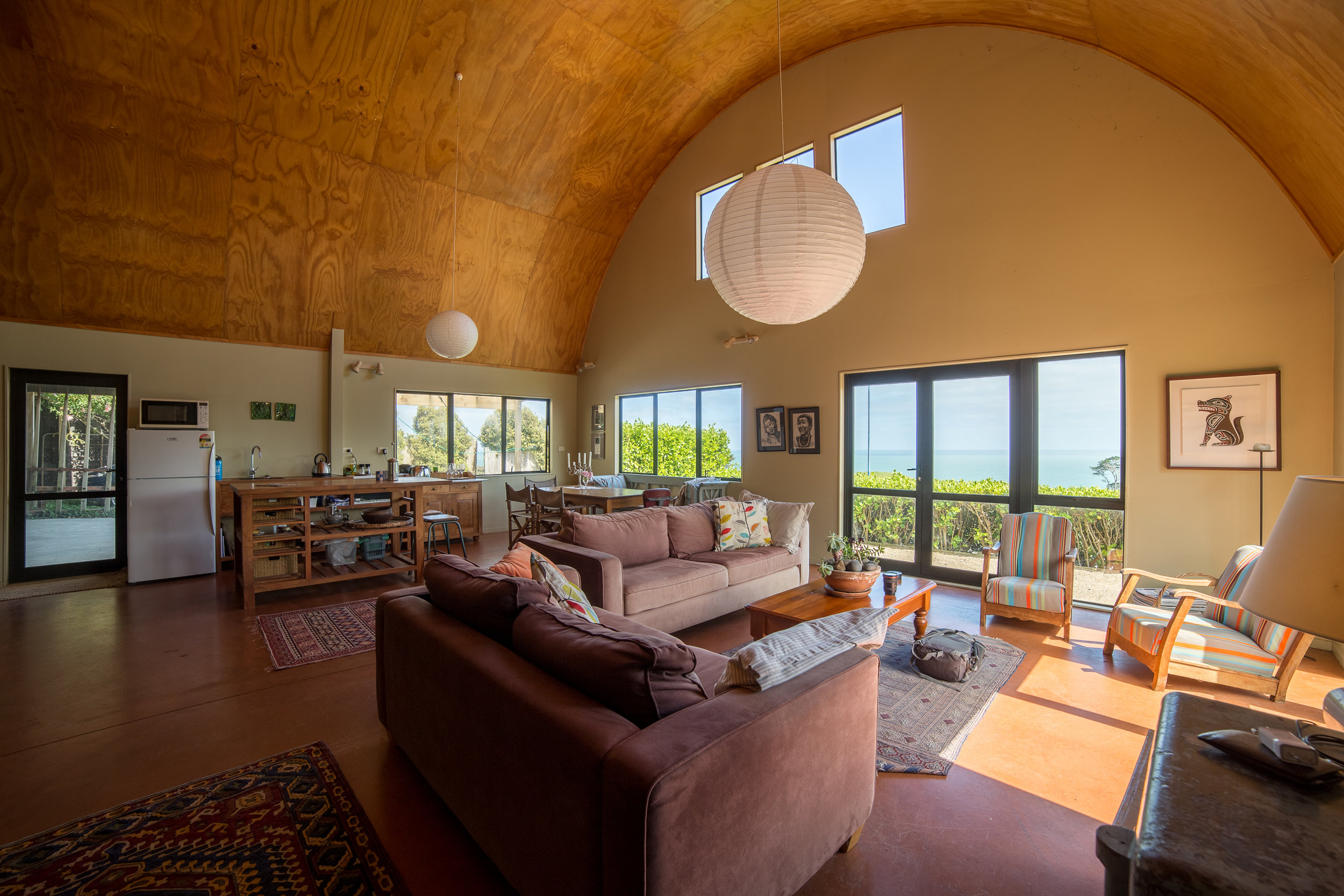
C’barn inside 
C’barn views
Jean has always been fascinated by textiles. She learnt to sew from her mother and later taught fabric technology at a Hamilton high school for 20 years. While travelling widely from China, Indonesia, India, Kyrgyzstan to Uzbekistan, she wanted to learn as much as possible about various ancient techniques to produce beautiful textiles. “I visited little villages where they still do it the traditional way. I hate to think that these skills and techniques might be lost.”
Back to school as a student
In 2000, aged 46, Jean turned from teacher to student, completing a Bachelor of Arts in Fashion Technology at AUT in Auckland. “I wasn’t into high fashion, but I was totally addicted to textiles, their history and the story they tell. I did a research paper on ancient resist dyeing techniques, and it has become an all-consuming passion.”

Jean Carbon in her redwood grove 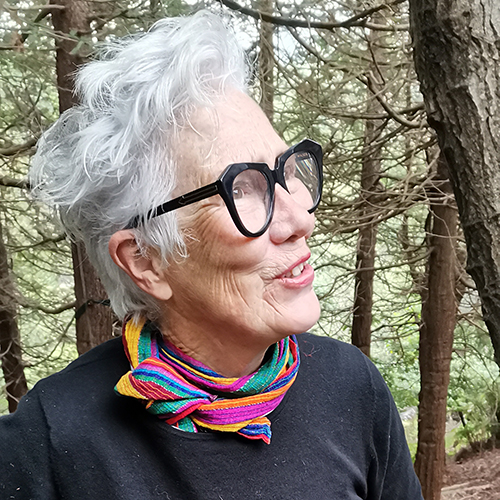
Travelling the world – and later becoming a tour guide on the Silk Road herself – Jean learned Shibori pole wrapping and block clamping techniques to pattern silk fabrics while staying with traditional craftspeople in remote places. “Shibori is usually thought of as Japanese, but it is also practised in parts of India, Indonesia and China,” she explains. Although this way of dyeing is very labour intensive, it gives her more control over the pattern and its placement on a unique garment, scarf or cushion. “But there is still an element of surprise, and that’s part of the beauty of Shibori.” Jean works exclusively with silk of different weights and textures.
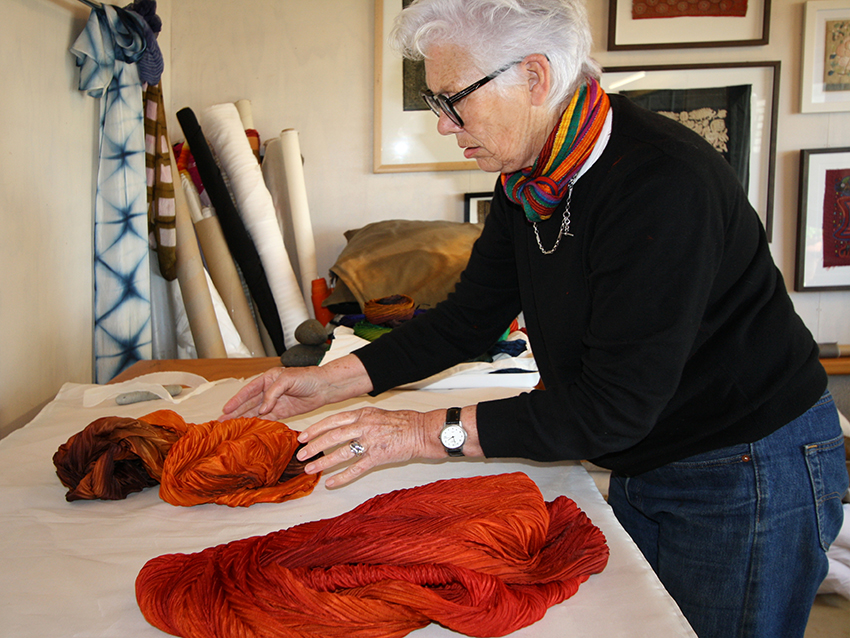
Relax at the barn, learn at the studio
Guests staying at C’barn can watch the processes Jean uses and have an opportunity to buy directly from her. The barn next door also allows her to teach creative, live-in workshops to participants wishing to learn Shibori. Workshop dates, usually over a weekend, can be arranged for three to six people. “Then they take home a silk scarf or a two-metre length of unhemmed silk, dyed and patterned using techniques and colours of their choice,” says Jean. Silk, on the road from Raglan to anywhere in New Zealand and the world…
C’barn accommodation: cbarn.co.nz
C’bon Textiles: http://cbon.co.nz
Instagram: cbon_textiles


