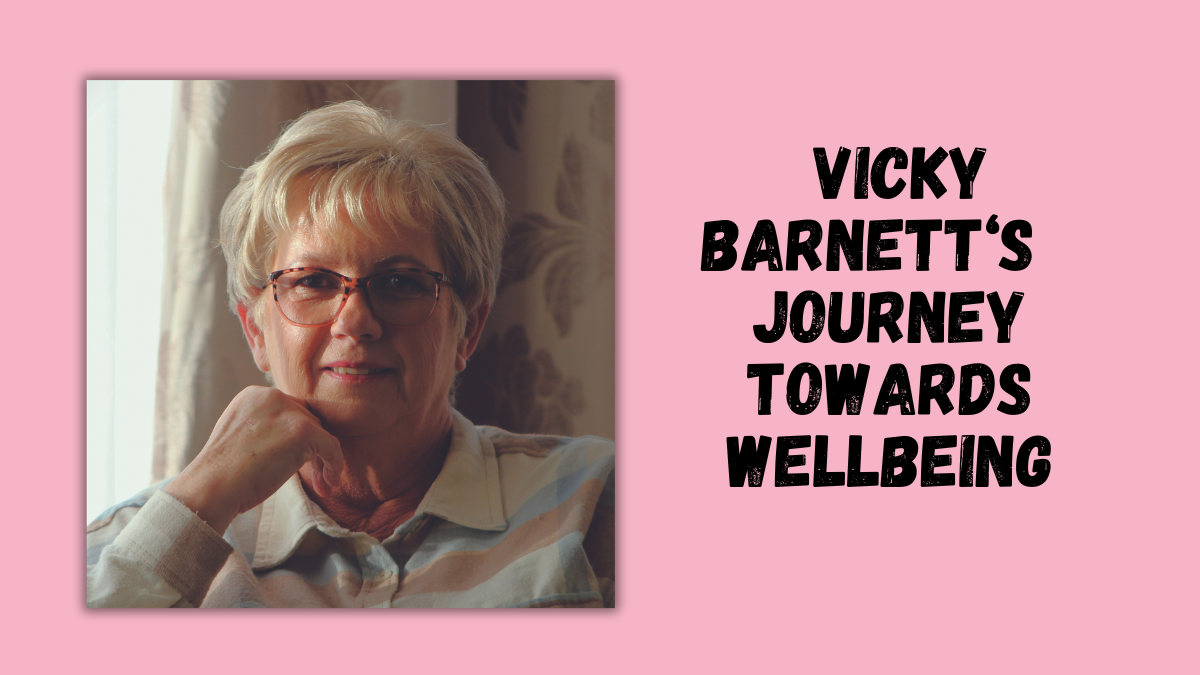
If you were to meet Vicky Barnett at a coffee morning or out walking her dog, and stop to chat, you’d find her relaxed and likeable, exuding a strong sense of calm. You’d have no idea at all that this is a woman who has survived long-term childhood sexual abuse, and is still not fully recovered. One major step forward has now been achieved. In January this year Vicky published the story of her journey towards wellbeing, Inside My Can of Worms, from Red Hen Books.

In her 20s, Vicky Barnett was a duty airport manager for an airline in Auckland. She says, “This was a senior position that I was extremely good at. I had a reputation for being capable and competent, and I loved my job.”
She is silent for some time before she resumes. “It was in 1993 that memories I had carried within me for many years began to resurface. I was suffering from panic attacks and crying fits that I tried desperately to hide from management and my colleagues. I put this down to the stress of holding onto a top-level position. My husband tried to help with this by taking on more of the household stuff. That did help, but not enough. Eventually, I went to my doctor, who listened.”
He told Vicky that he was going to put in a Sensitive Claim with ACC and that she would get free counselling. Soon she was in psychotherapy, and the unravelling began. “That was step one,” she tells me. “The first stage of a journey that I have still to complete. Within weeks I was an in-patient in a psychiatric care unit.”
Throughout the decades that followed, Vicky found she was unable to fully verbalise this long-repressed pain and anxiety. “Sometimes it was just too hard to handle. I was often suicidal. I saw death as a reprieve from flashbacks and the fear and anxiety they bring. I would be paralysed, powerless.”
Again, she is unable to go on.
What happens in these episodes is known to be symptomatic of post-traumatic stress disorder. For Vicky, the emotional pain was so hard to bear that only embracing acute physical pain could bring even temporary relief. She has lived most of her life as a self-harmer, and carries the scars to this day, both inner and outer.
Did she ever confront her brothers and her parents?
“Yes,” she says, “and that didn’t work out too well. One brother broke down and cried and said how sorry he was. The other has consistently denied it.” She gives a half-laugh. “And faced with the two of us, one making the accusation, the other refuting it, my mother said, I believe you both.”
Fortunately, Vicky finally found the courage to open up this particularly nasty ‘can of worms’.
“Psychotherapy gave me a new language to learn, one that didn’t cause me to bruise, break or bleed.”
Some demons still haunt her, and Inside My Can of Worms is Vicky’s testimony. It’s written with such insight, such readability, that it allows us as readers to navigate the mind of a prolific self-harmer. In it, Vicky has captured her suicidal thoughts and her self-harm actions in snapshots spanning over 30 years. (It is worth noting her medical record includes over 61 psychiatric and 57 medical admissions. This includes confinement to Intensive Psychiatric Care Units, often after suicide attempts, and countless surgical repairs of self-harm injuries.)
Within an always well-meaning but not necessarily helpful system of mental healthcare, Vicky began to develop healthier coping skills. Mainly this was through a programme of Dialectical Behavioural Therapy (DBT.) Still for Vicky the struggle is ongoing, and she is not always able to use those skills.
This is not uncommon. Statistics currently state that at least 47% of New Zealanders are, or have been affected by mental illness. The public health system has been manifestly struggling to cope. Perhaps now there will be positive change, with the repeal and replacement of this nation’s Mental Health Act. Vicky hopes that open and honest communication will lead to a better understanding of what mental illness can mean for the individual sufferer. This was the main impetus behind the writing of Inside My Can of Worms.
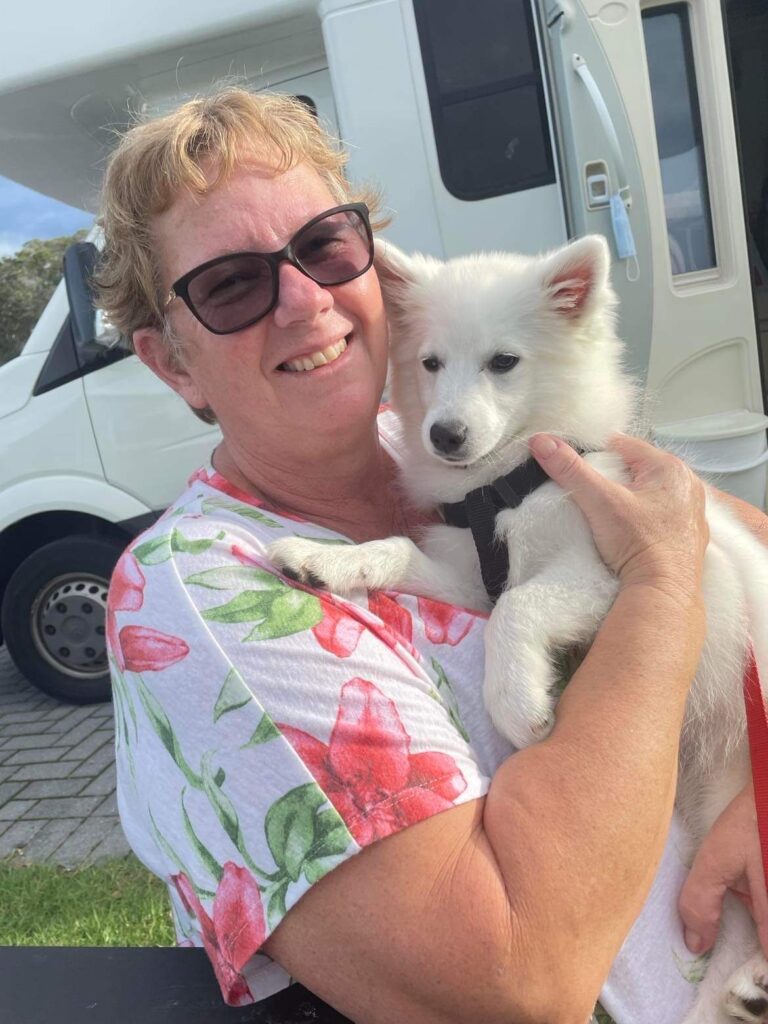
Vicky believes that the path to improvement is the vital participation of mental health patients and their supporters, both personal and professional. “And I am improving, still. So much in my life has been good, too. The birth of my son, Ryan. And my ongoing relationship with his father, my ex-husband, who is still part of the wider family. The friends I have made over the years. Recently, the introduction of Emmy into my life. Emmy’s a Japanese Spitz, a little white fluff-bomb who loves me to bits.”
What does Vicky hope for in publishing this testimony?
“Some really big things,” she says, grinning. She counts them off on her fingers. “I want to encourage society to move away from shameful prejudices and ignorance. To uncover the secret aspects of mental health care. I want open discussion and public debate. I want to be some part of whatever can help to reduce trauma and save lives lost or damaged by mental illness. Mainly, I suppose, I want something good to come from out of the awful experiences I’ve had.”
It’s a big ask, Vicky! Yet the story itself evokes both love and hate, joy and sorrow, fear and despair – and also hope for herself and for countless others. The reading of Inside My Can of Worms is painful and poignant, yet totally compelling. From it we can learn how one brave woman is striving, day by day, to close the lid on such a wretched can of worms and find her way back to a fuller and more satisfying life worth living.
And to the kind of love we most wish not only for ourselves, but for others.
If you are troubled by any form of mental or emotional distress, you need to make an appointment with your local GP or health centre. In the case of sexual or emotional abuse, past or present, it is your doctor who will take that first important decision to apply on your behalf to ACC for a Sensitive Claim to be initiated.
To purchase Vicky’s book, visit her website HERE!