Kiwi men join the International Women’s Day celebrations by speaking up about gender equality and women’s rights from their perspective.
CORY MITCHELL, Sleep Heavy co-founder

I have a really hard time discussing feminism because I feel like it should just be the norm and anything outside of that is sexist and that’s what really needs to be addressed. I remember when I first saw someone speaking about feminism, I thought how crazy that this is still an issue! We’ve come so far and to think that this sort of behaviour still goes on is really disturbing.
It seems that things have certainly improved compared to my parents’ and grandparents’ generation. I’m talking about the roles that mothers used to play in the home life and the way they were treated by the family. It just seemed to be an unspoken rule that the woman of the house would do all of the preparing of meals and tidying inside the house. There’s still a long way to go overall but certainly in my family we aim to share these roles equally between each other.
I’ve always been very surprised when I meet a family where the woman does all of the cooking, especially today when both people are working full-time jobs. I can never understand how a man could be comfortable watching TV on the couch as his partner prepares him a meal! I may not be the greatest cook but there’s always something I can do to help, whether that’s chopping veggies or preparing lunch for the next day.
I’m really proud to live in a country like New Zealand where growing up with female prime ministers makes you think of it as not being anything other than normal. I’m also proud to be surrounded by a network of incredible women (and men) who do a great job of treating everyone fairly.
MATT COWLEY, CEO Tauranga Chamber of Commerce
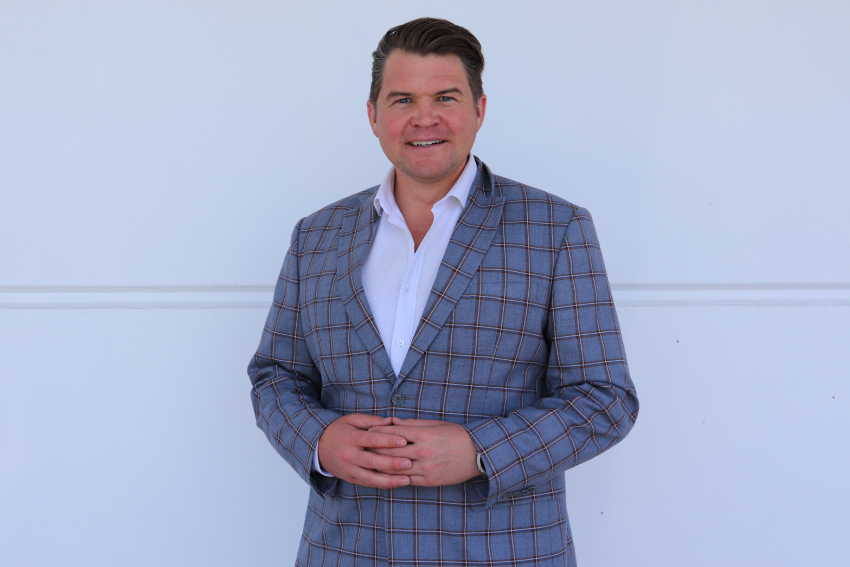
I have always been surrounded by strong women. From my grandmother swinging from trees with a chainsaw or my mother driving heavy machinery on the farm to my four amazing sisters – I grew up with women who did whatever it took to get the job done.
New Zealand is an isolated island with very finite resources. I like that we have a culture of all of us working together, despite the gender bias that the rest of the world holds. There are jobs that need doing and we simply find the best people to fill those roles. Of course, we’re still far from perfect, but I think the spotlight on sexism and the support for women to speak up is good. Businesses need to provide a safe environment so people can feel comfortable flagging when they feel like they have been unfairly disadvantaged.
It’s time we leave behind ridiculous gender stereotypes, like ‘the male should be the primary income earner’. I know a number of women who have strong career pathways and their husbands are content to be the stay-at-home dad. Gender does not define who does what. Some of the best networkers I have seen are women. Perhaps it is because they approach networking as opportunities to grow and learn. Our Business Women’s Network has had a strong following for more than 20 years for this reason. There is a strong sense of supporting each other – and supporting the community with the number of local charities.
It’s important for anyone in power to be mentoring and upskilling women into roles that best suit their skillset. It is the leader’s responsibility to ensure there are clear pathways and training for future female leaders to grow into leadership as part of good succession planning.
MARK COLLINS, Print People owner & director

I do not know if I believe in feminism but I do know that I definitely believe in women. As a male, I acknowledge that it’s not possible for me to truly understand exactly how women are impacted by gender-based decisions. What I do understand is that the playing field needs to be level and that the assignment of roles, duties and participation, based purely on gender, undermines not only the intrinsic value of any individual but also the opportunity for that individual to achieve their potential. It is simply wrong.
I am privileged to have experienced first-hand just how extraordinary ‘ordinary’ women can be. My mother brought up six children in the 60s by herself in a country where there were NO benefits (financial or other assistance) available at all to non-workers. I was the youngest, only 6 months old, when my father divorced my mother. It was a time when divorced women were ostracised by society while divorced men were not. She found a job, walked to work, scratched for rent, food and shelter. She self-sacrificed everything to raise, educate and inspire six children to be the best they could be at whatever they chose to do and to treat everyone with respect and dignity. By her life, her example, we were all shown the power of humility, the strength of conviction, the depth of love and the courage of faith.
I value the contribution each woman makes. After all, I am the beneficiary of women achieving! They all have my respect. Consider this: People tend to treat those they respect better than themselves. Conversely, people tend to treat those they view as equals worse than themselves. If we respect women, we will evidence the protection of women’s rights – this is the philosophy I apply to work, home, play and every other interaction.
NEVAN LANCASTER, Mt Cats & Yaks owner
I keep noticing all these things that, as a man, I don’t even have to think about. Like the freedom I took for granted in hitchhiking alone through Africa and the Middle East, whereas women usually travelled with a partner or organised tours for safety.

I grew up in the 70s, so feminism was a developed movement by then. Really, it’s been a part of my whole life. But with identity politics and the excessive gate keeping of issues, where only those that say they are affected are allowed to have an opinion, I’m afraid many ideas are becoming a bit twisted these days. For example, suddenly, women are pressured to pursue a career. I think people should be free to do as they wish, even if that wish is following the traditional gender roles. I have a close friend who has a Phd in Engineering but really wanted to be a stay-at-home mother. The great thing is that we now have much longer lives and so my friend was able to work, be a stay-at-home mother and then work again. After all, what is 10 years or so out of a 40 or 50-year career? I think flexibility and choice is what needs to be easier.
Gender roles are not set in stone. Three out of the last five prime ministers in New Zealand have been women – is that a new gender dominant role?
HAYDEN BOOKER, V&V Mylk CEO & founder

I have always felt that we are all equal. Male, female, everyone. But we have gender norms that cause issues. For example – men don’t cry. Why can’t we just accept that humans are equal, not better or worse, stronger or weaker based on their gender?
The problems with inequality are still obvious. Women remain under- represented on boards. They earn less than men for similar work. And violence against females remains a serious problem. We need to consider how we can play an active part in promoting change. The most important thing is that we have a responsibility to be introspective.
I’m truly lucky to be part of a veganism movement that resonates more with women. I have a lot of amazing female colleagues. I’ve noticed that women are more collaborative, they love seeing everyone working as part of a whole. Women tend to be more supportive managers. Men, on the other hand, perceive that work should be completed independently, without the assistance of others.
The vegan industry can positively affect the dialogue between men and women. Animal products are often behind the behavioural problems we are seeing. When cattle are slaughtered, stress hormones are pumped throughout the body and settle in their muscles. Those stress hormones are then consumed by people, causing chemical and hormonal imbalances. This can lead to communication issues and unpredictable behaviour. The more women leading the way with a vegan lifestyle – the more men will follow!