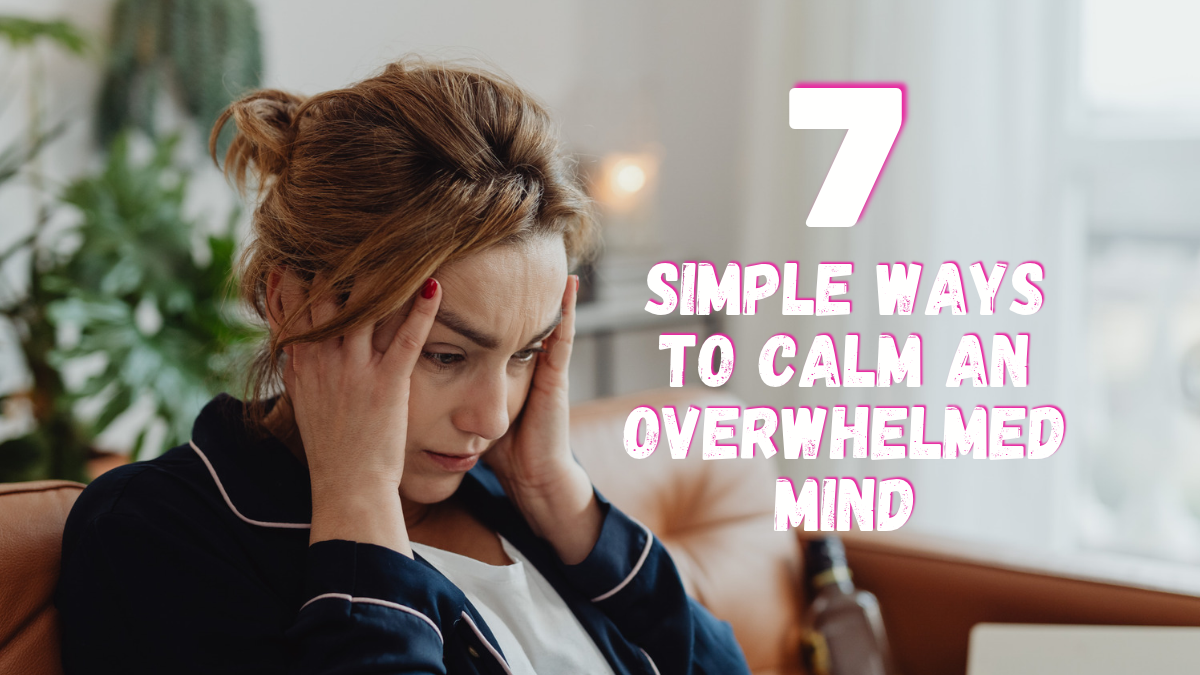
There are days when it feels as though your brain has 27 tabs open, every single one demanding your attention. There are emails to answer, jobs to finish, people who need you, and a never-ending list of things you really should get around to doing.
Even when you finally sit down, your mind keeps going. You replay conversations, worry about tomorrow, remember something you forgot to do yesterday, and wonder how on earth you’re going to fit everything in.
Sound familiar?
Feeling overwhelmed is something most of us experience at some point. Sometimes there’s an obvious reason, such as a difficult situation at work, family pressures or a big life change. Other times, it’s the accumulation of a hundred little things that leaves us feeling mentally exhausted.
The good news is that finding a little calm doesn’t necessarily mean changing your life, taking a holiday or disappearing to a remote island (although the occasional island escape does sound rather appealing).
Often, it’s the small things we do throughout the day that help us feel more grounded. Here are seven simple strategies worth trying when your mind feels like it’s running on overdrive.
1. Take a Breather – Literally
When everything feels too much, stopping for a moment might seem like the last thing you have time for. Surely you should be doing something about the problem rather than sitting around breathing?
Actually, slowing your breathing can help your body settle when you’re feeling stressed or anxious. It’s a simple way to give yourself a moment before reacting to whatever is happening around you.
Try breathing in gently through your nose, then breathing out slowly. Repeat this for a few breaths without forcing it or worrying about getting it exactly right.
You don’t need a meditation cushion, calming music or a perfectly quiet room. You can do it at your desk, in the car before going into an appointment, or while waiting for the kettle to boil.
Sometimes, a few quiet moments are enough to help you feel a little less caught up in the chaos.
2. Stop Trying to Do Everything at Once
Have you ever started one job, remembered three others, checked your phone, answered a message and then realised you’ve finished absolutely nothing?
Multitasking can leave us feeling busy without necessarily helping us get much done. When your mind is already overloaded, trying to juggle several things at once can make everything feel even more overwhelming.
Instead, get those swirling thoughts out of your head and onto paper. Write down everything you need to do, then decide what genuinely needs your attention first.
Perhaps dinner needs to be sorted before you tackle the paperwork. Maybe that email can wait until tomorrow. And perhaps the laundry won’t cause a national emergency if it stays in the basket for another day.
Choose one task and give it your attention before moving on to the next.
You don’t have to finish everything today. Sometimes, the most productive thing you can do is decide what can wait.
3. Give Yourself a Break From Your Phone
We reach for our phones when we’re bored, tired, waiting for something or simply avoiding the task in front of us. Before we know it, we’ve scrolled through dozens of posts, read a string of messages and absorbed more information than we ever intended to.
Add news updates, work emails and the constant feeling that we should be keeping up with everyone else, and it’s little wonder our minds sometimes feel crowded.
Try putting your phone away for 10 or 15 minutes. Not beside you with the screen facing down, but somewhere you won’t automatically reach for it.
Go outside, make yourself a cup of tea, play with the dog, listen to music or have a proper conversation with someone you love.
You might be surprised by how refreshing it feels to spend a little time without another notification demanding your attention.
And no, you don’t need to turn your screen-free time into another self-improvement project. It’s perfectly fine to do absolutely nothing useful for a while.
4. Move Your Body to Clear Your Head
When we’re stressed, we often spend hours sitting at a desk, hunched over a laptop or rushing from one responsibility to the next. Meanwhile, our bodies are carrying much of that tension.
Movement can help ease stress and improve our mood, but it doesn’t have to mean joining a gym, signing up for a fitness challenge or forcing yourself through a workout you hate.
Go for a walk around the block. Stretch your shoulders and neck. Put on your favourite song and dance around the kitchen while dinner cooks. Try some gentle yoga or spend a little time gardening.
The aim isn’t to burn calories or achieve a personal best. It’s to give yourself a break from the constant chatter in your head and reconnect with your body.
Even a short walk can offer a change of scenery and a chance to look at things differently.
If you’re feeling stuck on a problem, stepping away from it for a while might be just what you need.

5. Get Those Racing Thoughts Out of Your Head
Sometimes, the hardest part of feeling overwhelmed is trying to remember everything that’s worrying you.
There’s the bill you need to pay, the conversation you’ve been putting off, the appointment you need to make and that vague feeling that you’ve forgotten something important.
No wonder it’s difficult to relax.
This is where writing things down can help. You don’t need to be a natural writer, own a beautiful journal or know anything about journaling. You simply need somewhere to put your thoughts.
Try a brain dump. Set aside five minutes and write down whatever comes into your head, without worrying about spelling, grammar or whether it makes sense.
Once everything is on paper, look at your list. Is there something you can deal with today? Something you can schedule for later? Something that’s worrying you but isn’t actually within your control?
You might also like to write down three things you’re grateful for, or a few small things you’d like to achieve during the week.
Writing won’t magically solve every problem, but it can help you make sense of what’s going on and work out your next step.
And sometimes, seeing your worries written down makes them feel a little less enormous.
6. Bring Yourself Back to the Present Moment
One of the things that makes overwhelm so exhausting is that we’re rarely dealing with just what’s happening right now.
We’re worrying about what might happen tomorrow, replaying something that went wrong last week, or mentally preparing for every possible problem that could crop up next month.
Before long, we’re carrying the weight of things that haven’t even happened.
Mindfulness is simply about bringing your attention back to the present moment. You don’t need to sit cross-legged and empty your mind of every thought. In fact, trying to stop your thoughts altogether can become frustrating in itself.
Instead, notice what’s happening around you.
Feel the warmth of your coffee cup. Listen to the birds outside. Pay attention to the taste of your lunch rather than eating while answering emails. Notice the feeling of your feet on the ground as you walk.
When your mind wanders off to tomorrow’s worries, gently bring it back to what you’re doing now.
It’s a small practise, but it can help you stop living quite so much in your head.
You don’t have to figure out your entire future this afternoon. Sometimes, it’s enough to deal with what’s in front of you.
7. Talk to Someone – You Don’t Have to Do It All Alone
When we’re overwhelmed, it’s tempting to retreat into ourselves. We tell ourselves we’ll feel better once we’ve caught up, sorted out the problem or got through this particularly busy patch.
But what if the busy patch never seems to end?
Talking to someone you trust can help you feel less alone with whatever you’re carrying. It might be a friend who lets you have a good moan without immediately offering solutions, a family member who helps you see things differently, or a professional who can help you work through persistent stress or anxiety.
You don’t always need advice. Sometimes, simply saying out loud, “I’m struggling a bit at the moment,” can be a relief.
And please remember that asking for help isn’t a sign that you’re failing. You don’t have to reach breaking point before you’re allowed to need support.
If feeling overwhelmed is persistent, affecting your daily life or making it difficult to cope, speaking with a health professional is a worthwhile next step.
A Little More Calm, One Step at a Time
Life isn’t going to stop throwing things at us. There will still be difficult conversations, unexpected bills, demanding days and weeks when the to-do list seems to multiply overnight.
The goal isn’t to become someone who never feels stressed. It’s to find ways to look after yourself when life gets a little too much.
You don’t need to try all seven strategies at once, either. That would rather defeat the purpose.
Choose one thing that feels manageable. Take a few slow breaths before your next meeting. Put your phone away while you eat lunch. Write down what’s worrying you instead of carrying it around in your head.
And perhaps give yourself permission to leave a few things unfinished.
You are allowed to rest before everything is done. You’re allowed to have an unproductive afternoon. And you’re allowed to admit that, sometimes, life feels like a lot.
Because finding calm isn’t about getting everything under control. Sometimes, it’s about learning to give yourself a little breathing room, even when you can’t control everything else.