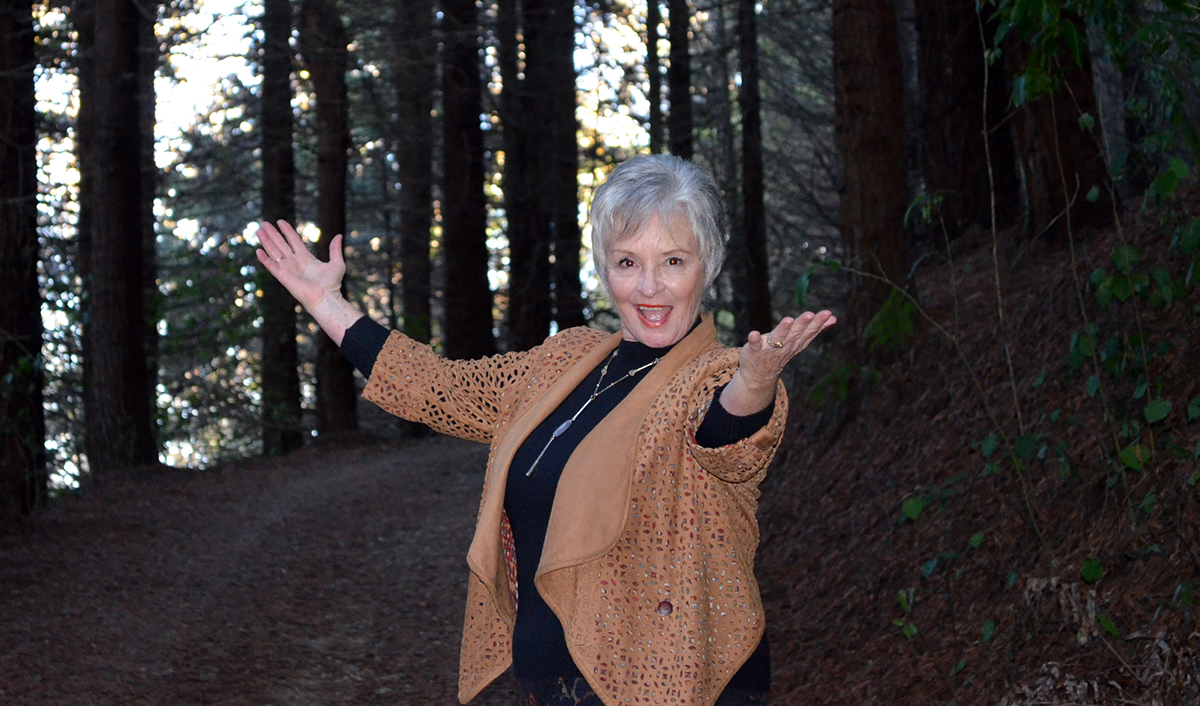
As a young woman born into an academic family, Heather Stembridge decided she’d prefer ‘the university of life,’ experiencing the diversity of human individuality and cultures. So began five years of travel that included Canada and Europe, ending up in London. Contacts with South Africans led to work in Johannesburg, mainly in sales and marketing.
The suburb she knew best there was predominantly wealthy and white, and here she met and married her first husband. A creative man of Afrikaner descent, he suffered intermittently from bouts of depression. Some time after the premature birth of their son, Heather’s only child, he killed himself.
Of that tragedy, Heather says, “Disaster and extreme hardship are terrible things to go through. We can only recover when we’re able to learn from such tough lessons and allow them to contribute to our growth. This isn’t easy, and it is essential if we’re to find peace within and the ability to keep going and discover our own potential strengths.”
She compares this to how bamboo meets harsh winds; it sways and bends, but rarely breaks, surviving to put out new shoots of tender, vital green.
“So-called failures are often the medium by which we make helpful discoveries about ourselves and others. If we are actors on the great stage of life, let’s make a game of it and play the best we can. Let’s abandon superficiality, and become bringers of light.”
That certainly sounds like a good thing to be, and Heather has spent years studying how to do this for herself, and how to teach it to others. The aim is learning to build bridges to the universal energy that’s there for us all; to become who we’re truly meant to be, within family, at work and in the wider community.
“I had to reinvent myself,” says Heather. “I needed solid friendships with others, and to create a sense
of personal well-being and be true in my own heart and in my dealings with others. I needed to learn how to be happy and how to achieve what I needed to do; make a contribution and encourage others to do so, creating individuals and communities with the power to confront the challenges of change, and flourish.”
SPIRITUAL JOURNEY
To this end, Heather began to study in earnest the teachings of Mahikara, a philosophy that offers spiritual perceptions of human beings as ‘persons of light.’ Eventually, she was involved in the founding of two institutes in New Zealand that teach its principles and practices, one located in Wellington, the other in Auckland.
She is still an outreach ambassador for Mahikara and, in addition, Heather runs workshops in the Bay of Plenty that are boldly labelled ‘transformational weekends.’ She’s a skilled speaker at presentations open to all throughout the region and beyond. Regular introductory sessions are held at Heather and her husband Derek’s home, sited high above Katikati within sixteen hectares of native bush and trees, many of them ancient.
Spacious rooms offer from every angle a view of this enchanting woodland, and there’s a warm welcome for enquirers who come here willing to learn the value of becoming and doing our best. Transformation, she believes, comes from a willingness to embrace change, and face the challenges of being human.
“We need to develop awareness of how our own inner energy (let’s call it potential) responds to the universal energy of Gaia, this planet we inhabit. It’s our only world, that we must strive to sustain and nourish as we sustain and nourish minds, hearts and, let’s dare to say it, souls.”
The coming together of like-minded men and women is joyous, playful and revelatory. In these Game of Life weekends they begin to understand who they are and what they want and need to be whole.
DEALING WITH CHANGE
Humans are constantly presented with change, not always positive, for example, the global challenge of Covid-19, whose effects on many countries has been devastating. Prompt action in New Zealand allowed us to escape the worst of it, but lockdown, the strategy imposed by Government, was a novel experience. For essential workers, it’s been a hard slog, especially for those on the front line: doctors and nurses, first responders, carers, checkout operators and truckies.
Coronavirus interruptus has impacted and will continue to impact, especially on small businesses, the backbone of our economy, and on the weakest, the poorest and those in rural areas. For others, it was weeks of forced inactivity, the loss of occupation and the social activity that sometimes kept us from studying our self, our family and our community. The release from the 8-hour working day, though it brought problems of its own, gave us a chance to discover that solitude is not the same as loneliness.
Solitude allowed for increased observation, the rediscovery of lost joys we ‘couldn’t find time for,’ such as family meals and conversation; time to read and listen to music, for DIY and neglected hobbies. We’d take walks around our immediate neighbourhood for exercise, and discover things we never saw as we whizzed by in a car. The ongoing message was ‘Be kind,’ probably the best instruction for living life well: be kind to yourself, and to others. Take time to smile and say hello to passers-by.
The fairy tale of transformation is about magic – the kiss that turns a frog into a prince. Transformation with human beings happens best through small steps and minor changes, day by day.
Until we’re truly who we’ve striven to be: bringers of light and champion players in the eternal Game of Life.