Cape Reinga, 90 Mile Beach and Te Paki Sand Dunes – these sights are close enough to each other to visit in one day but far enough from the rest of the North Island to make it a very special trip.
Images ALEX SPODYNEIKO
Leaving Kerikeri before dawn was the best idea ever. We drive in blissful silence through the densest fog, laced with the first orange rays of the day, soaking in the moist smile of the early morning through the open windows of our car, enjoying the solitude of being alone, completely and utterly alone on this road, taking us up, up and up to the Far North. There is something special about being alone in New Zealand’s least urbanised region, a perfect escape for two FOMO-hit millennials.
We glide through the tiny one-street villages, the kind where the library is simply called ‘Library’, the café is called ‘Café’ and the hotel is called ‘Hotel’. We cruise alongside astoundingly huge farms, crossing picturesque bridge sand conquering the rather flat, yet stubborn Northland hills. And all that is an adventure in its own.
CAPE REINGA
But the best part about leaving Kerikeri so early is arriving at Cape Reinga before the craziness of the tourists’ rush hour. For another 30 minutes, we have this mind-blowing place all for ourselves (sans the lonely photographer hiding behind the bench with his tripod, who, of course, isn’t much of an issue).
People say Cape Reinga is ‘spiritual’. But honestly, saying that is like saying the sun is yellow. Some things are just so beyond our comprehension, describing them in words diminishes their significance a good thousand percent. Instead, we just sit on the grass opposite the lighthouse with our eyes wide open and try to tattoo everything we feel right into our memory.

In Māori mythology, Cape Reinga is the place where the spirits of the dead leap off the headland to meet their ancestors in the underworld. And sitting there, you can’t help but feel the gentle breezy touch of the invisible passers-by.
Or maybe that’s the breeze of the water that is literally all around you, far below, at the bottom of the cliff, but also so dangerously close. The northernmost tip of the country is famous for the scene of the Tasman Sea crashing into the Pacific Ocean. Their waters are of a different colour and the easy-to-spot border where they meet is a mesmerising mix of whirlpools and multidirectional waves. We stare into the depth of these waters till our eyes hurt because we know that as soon as we leave this place, it will be pretty hard to believe our sleep-deprived brains didn’t make this whole thing up.
At mid-day Cape Reinga is buzzing with tourists from all over the world, so we head to a carpark but notice a walkway sign half-way back. This is the starting point of Te Araroa – the epic walkway across New Zealand that stretches 3,000km from Cape Reinga all the way down to Bluff. Equipped with just $10 Kmart slippers, we ditch the idea immediately but still take a short 2km detour to a small beach we can see in the distance.

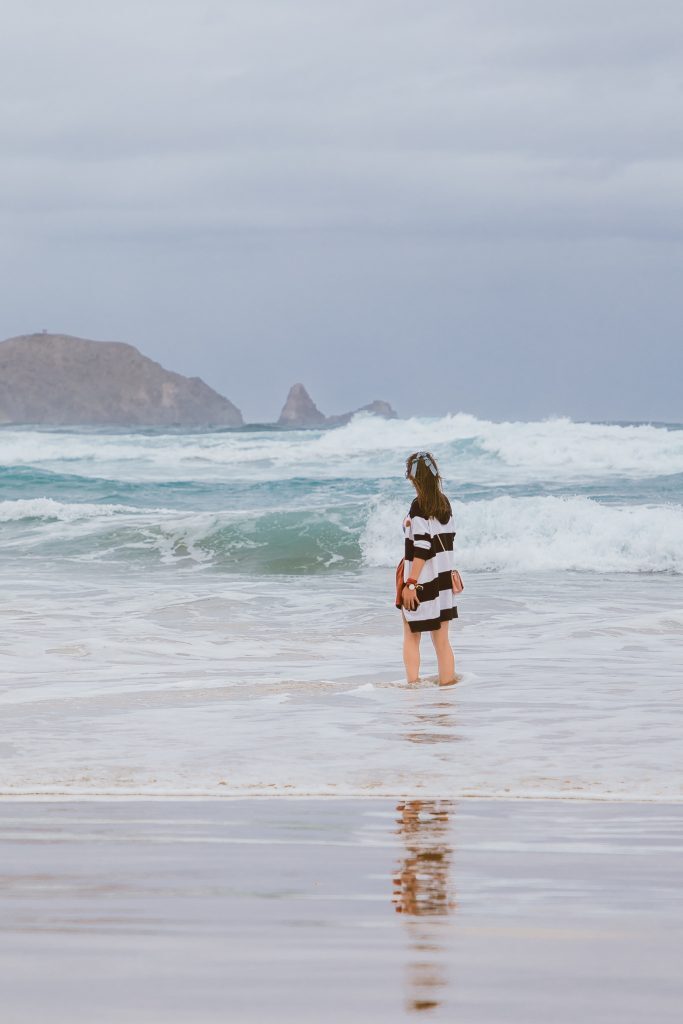

The wind on the first part of the walkway that snakes along the narrow top of the cliff is ferocious and the waves beneath us are pure drama queens, but everything calms down as soon as we start descending to the beach. And once again, we’re one-on-one with nature. We stay here for a while and pretend we’re the only human beings on Earth. Or the first explorers of the new planet. Or just two stupid tourists who get their slippers wet and are now forced to climb 2km up the cliff slipping, stumbling and cursing their hearts out.
TE PAKI GIANT SAND DUNES
Our next stop is Te Paki Giant Sand Dunes. The fact that something like this exists in New Zealand, not in UAE, not in Namibia, not even in Australia, but in our green pasture land, is still a big mystery to us. It’s hard to believe the sand dunes were created by nature and are not just another man-made tourist trap.
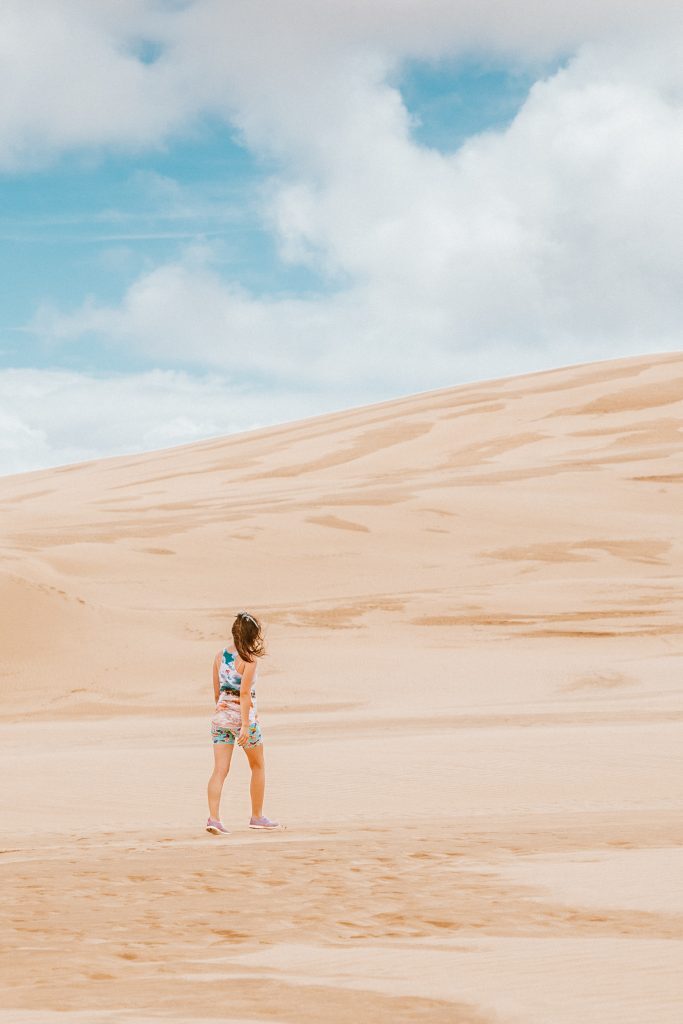
It’s even harder to believe your eyes once you get there. Te Paki Giant Sand Dunes is far from being a single, pitiful hill of sand. It’s a whole 10km long and 1km wide strip of dunes rising up to 150m. A real desert with no beginning and no end.
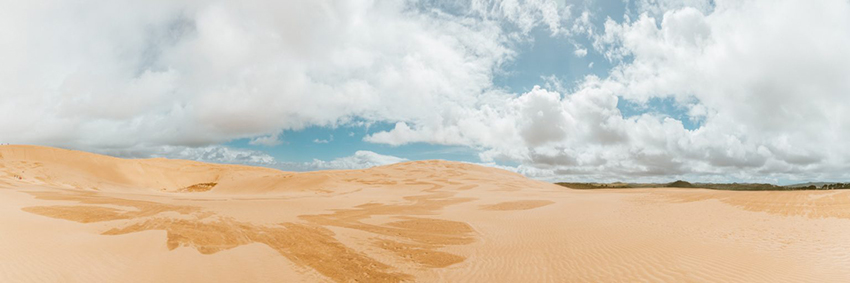
The sand here is very unusual. Despite the wind, somehow, it’s not all in your eyes, mouth and hair. It politely stays where your feet are, allowing you to admire the views with no side effect of choking to death.
Though if you do want to add a bit of real-life desert experience, you can rent a sandboard and ride down one
of the hills. Picking the sand from your ears for a week is guaranteed. We decide not to do that. We’re not fun. Where it’s fun, we’re usually those boring spectators in the corner, so we do what we do best – just sit there and watch others riding, screaming and laughing. It’s exhilarating and for a moment we’re just two tiny kids in a giant sandpit, watching older kids doing wild stuff.
90 MILE BEACH
Taking the gravel road through the field towards 90 Mile Beach and suddenly being surrounded by at least 20 wild horses, running alongside our car as a single, huge, gorgeous, perfectly synchronised organism, will definitely be that one memory we’ll replay again and again when we’re so old the closest we get to exploring the world is sitting by the window with knitting on our laps.
But if you thought it would be hard for 90 Mile Beach to match the bar, just wait till you get there. This place is a dream. On a sunny day, the blue water reflects the clouds, perfectly matching the colours above, and the sand melts into the waves so delicately, you no longer know where the beach or the sky is, where is up and where is down. You’re in this weird bubble of pastel colours outside, and pumping adrenaline from driving your 4WD alongside the water inside.
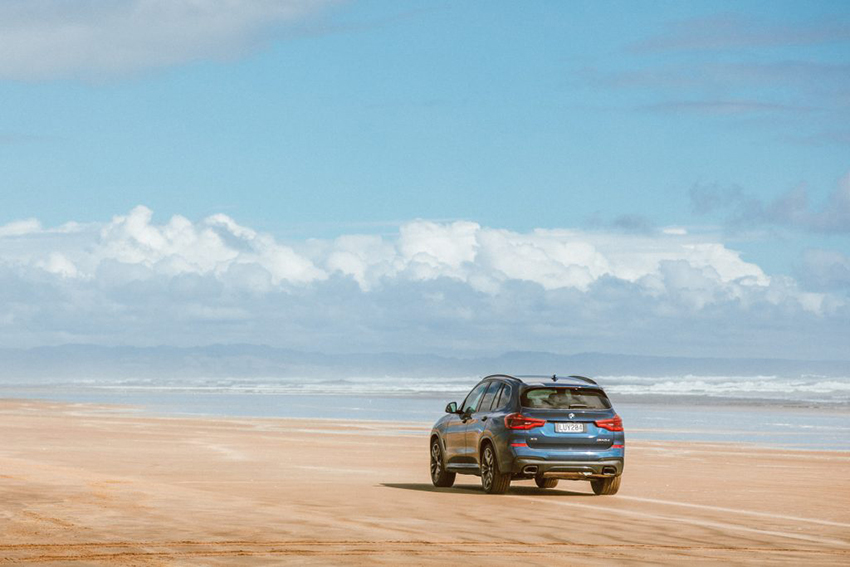
Technically, 90 Mile Beach is a highway and you’re supposed to follow the same rules you follow when driving SH2. But the truth is, no one really cares. There are a few cars parked right by the water, with people sitting on hoods still hot from the long drive. Other cars pass by at the speed of a turtle and admire the views, while my husband just kicks me out with the camera and excitedly drives in circles, allowing the car to go wild.
As journalists, this is the place where we remind you about road safety and the importance of being responsible grown-ups. As people madly in love with our beautiful country, this is the place where we silently advise you to enjoy this unique moment. Our life is pretty dull most of the time, and opportunities like this don’t present themselves too often. Just. Live. Your. Life. And keep an eye on the road while doing so, of course.

We stay around for a while and leave 90 Mile Beach through the same entry point but you can actually drive all the way from the Sand Dunes to Ahipara at its southern end. As long as you have a 4WD! It’s not safe to take the sandy highway otherwise. And don’t say we didn’t warn you the drive won’t be that long – 90 Mile Beach is actually only 55 miles (or 88km) long. It was named 90 Mile Beach by the early European settlers, who knew their horses could travel around 30 miles per day. So, when it took them three days to cover the beach, they assumed it should be around 90 miles long. What they didn’t think about at the time, of course, was that it takes longer to walk on sand.